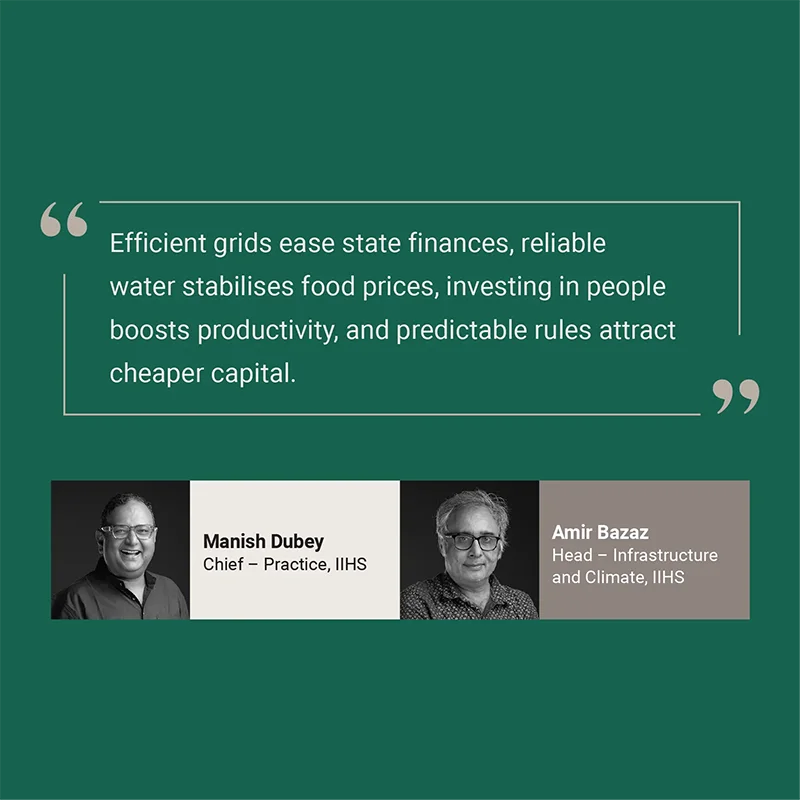
Aligning growth and sustainability in India’s next decade: Manish Dubey and Amir Bazaz in Moneycontrol
India must pursue growth and decarbonisation together through reforms in institutions, finance, and human systems. Co-ordinated action can ensure sustainable prosperity without straining resources
How can prosperity and sustainability be aligned as part of the same development strategy, rather than treated as competing goals?
In an opinion piece for Moneycontrol, Manish Dubey and Amir Bazaz point towards the need to develop integrated pathways in the coming decade which can shape demand and unlock scale—through improved governance, financial reform, and a concerted State-Centre effort towards decarbonisation.
The success of these reforms will determine how well India’s growth ambitions can be converted into real, sustained outcomes.
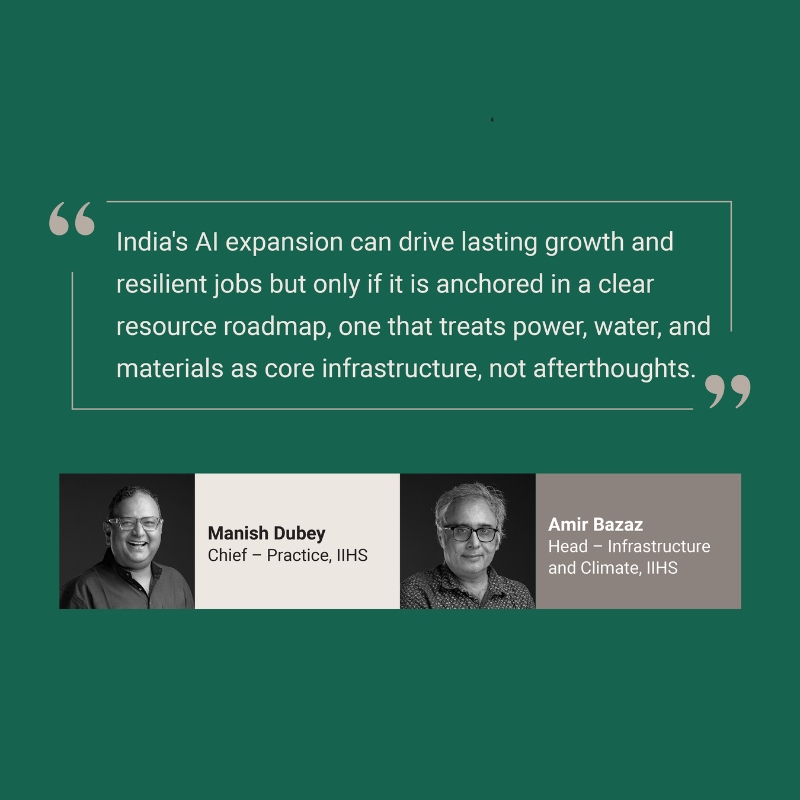
India’s AI push needs a resource roadmap, not just more servers: Manish Dubey and Amir Bazaz in Hindustan Times
As India deepens its AI push, the promise of growth, jobs, and technological leadership will hinge not just upon talent, algorithms, and servers, but also on a clear resource roadmap.
India’s plan to develop 8 GW of data centre capacity by 2030 could result in energy consumption comparable to a small industrial State like Haryana or Chhattisgarh, and water equal to Bengaluru’s usage over half a year.
With more capacity on the horizon, realising India’s AI ambitions will require aligning energy systems, water security, and material supply chains with long-term AI demand.
Published when the India AI Impact Summit was underway, Manish Dubey, Chief – Practice, IIHS, and Amir Bazaz, Head – Climate and Infrastructure, IIHS Practice, flesh out the opportunities and risks embedded within India’s plan to expand its AI infrastructure in this op-ed for the Hindustan Times.
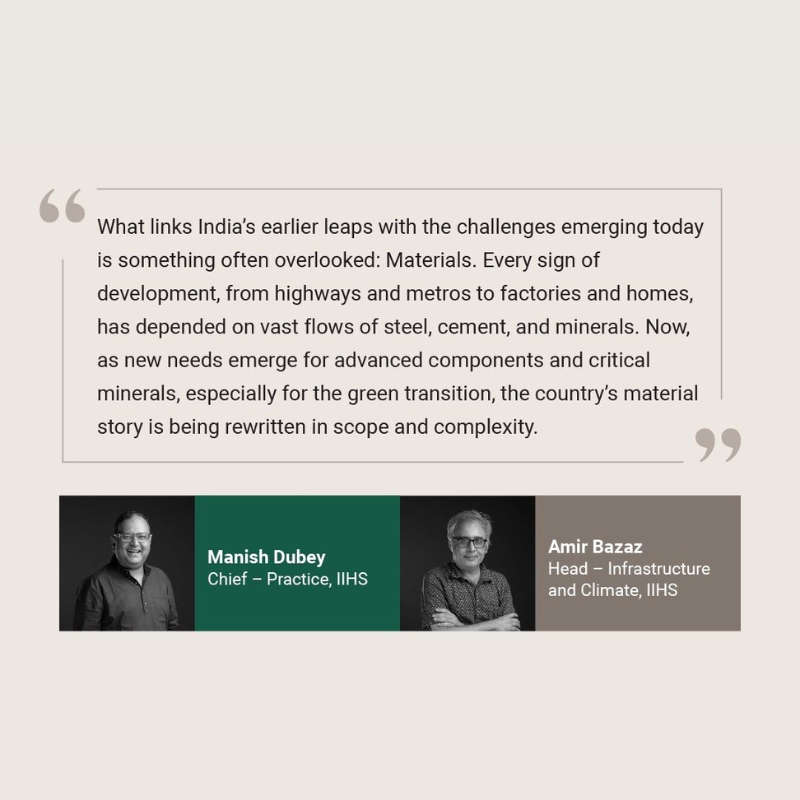
India’s Next Leap Must Begin With Materials: Manish Dubey and Amir Bazaz in Hindustan Times
Policy and macro forces are shaping the outlook for growth, welfare, and reform today. This piece argues that India’s next economic leap must begin with materials—linking sustainability, industry, and welfare in one agenda for inclusive, resilient progress.
India’s rise over the past three decades is a story of transformation on a scale few nations have matched. What links India’s earlier leaps with the challenges emerging today is something often overlooked: materials.
At this material crossroads, India faces a set of colliding imperatives. The country’s drive for jobs, infrastructure, and new industry demands a new calculus of basic resources, but not without attendant environmental and social challenges.
India’s material crossroads is ultimately a test of collective capacity. Success will require not just new policies, but a clear vision for how the very foundations of growth are managed and rebuilt.
In this op-ed authored for Hindustan Times, Manish Dubey, Chief – Practice, IIHS, and Amir Bazaz, Head – Climate and Infrastructure, IIHS Practice dive into the challenges and opportunities, and the need for urgent action.
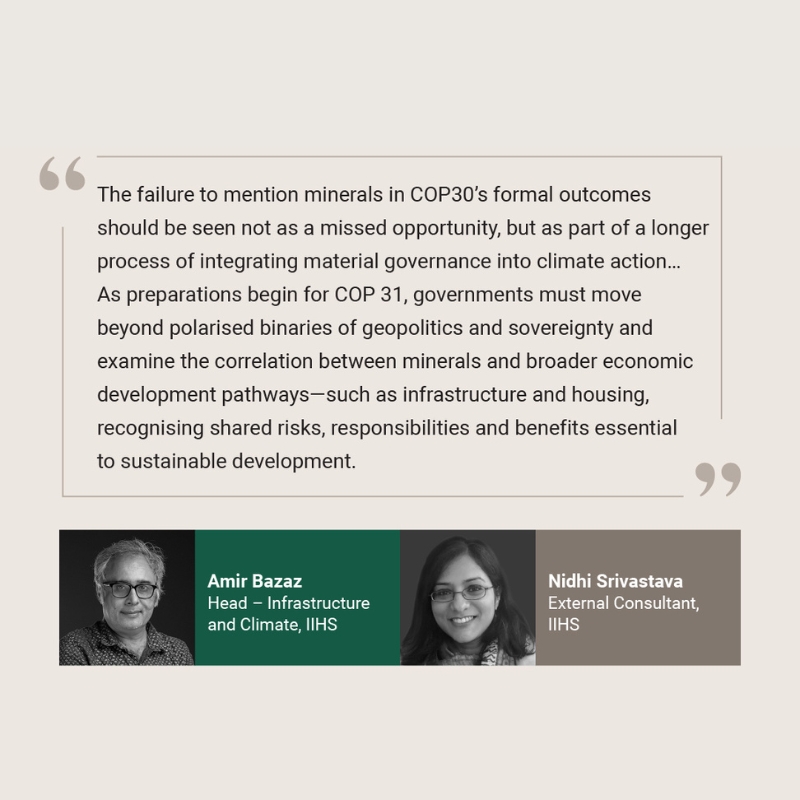
From Belém To Beyond, Minerals Are Reshaping Climate Negotiations: Op-Ed in BW Businessworld
The approval of the Just Transition Mechanism (JTM) at COP30 sends an important political signal that climate action will increasingly be judged not only by speed, but also by fairness and outcomes for people.
While operational details are still evolving, the approval of the JTM at the COP30 at Belem, Brazil, has demonstrated surprising solidarity and convergence against a backdrop of geopolitical tensions and ongoing conflicts.
Alongside the growing attention to minerals—specifically ‘critical energy transition minerals’ (CETMs)—the approval of the JTM sends a clear political signal in favour of international cooperation anchored in rights-based and nationally-determined just transition.
In an op-ed for BW Businessworld, Amir Bazaz, Head – Infrastructure and Climate, IIHS Practice, and Nidhi Srivastava, External Consultant, IIHS, decode these developments and ponder their implications for development outcomes for India and the world.
Read the Article
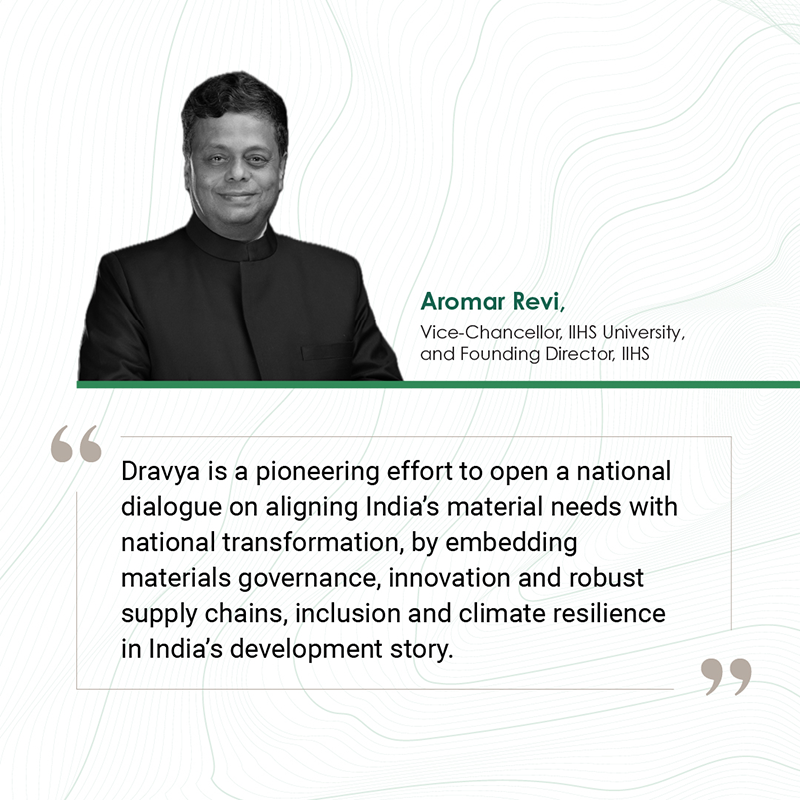
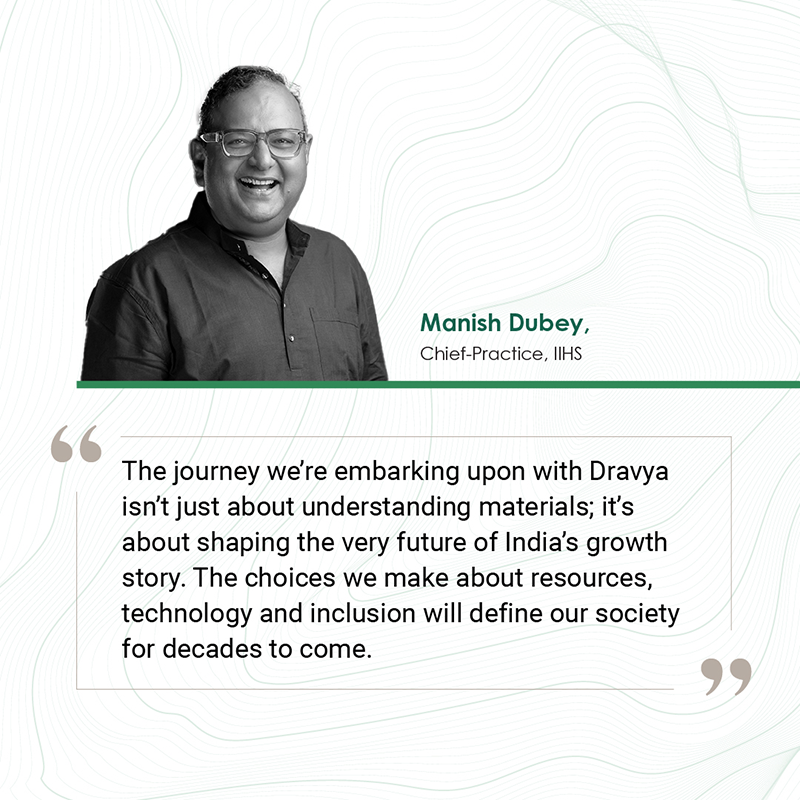
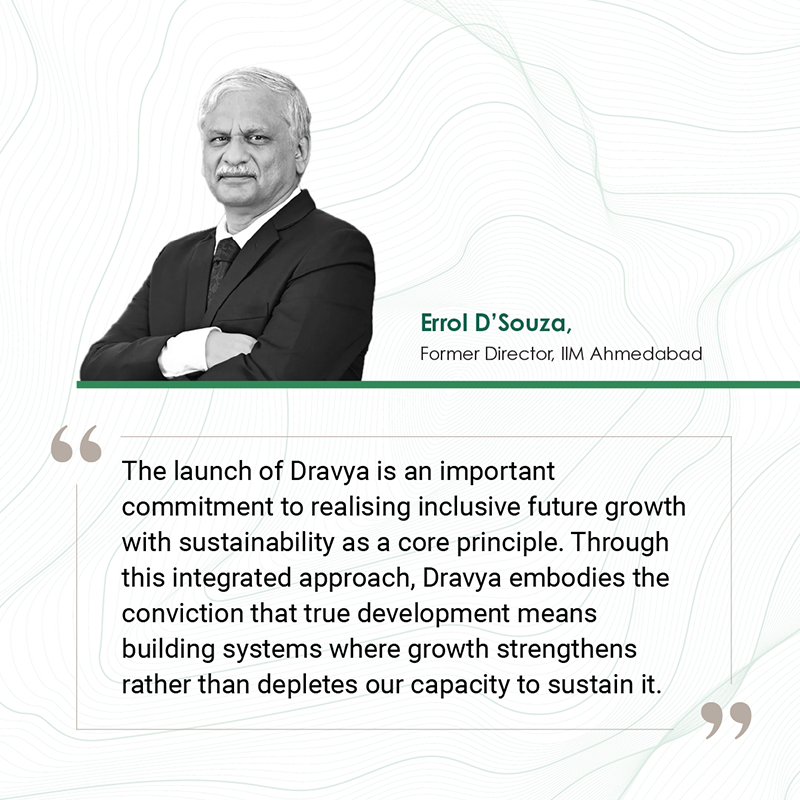
IIHS Launches ‘Dravya’ Centre to Advance India’s Sustainable Materials Transition
The launch of Dravya, attended by senior policymakers, researchers, industry leaders, and global experts, was reported in detail by CSR Universe.
The launch of Dravya, on 12 November 2025 at The Imperial in New Delhi, was covered by the press, with coverage in the PTI, The CSR Universe, The Week, Newsdrum, and Rediff.com.
Speaking to CSR Universe, Aromar Revi, Vice-Chancellor – IIHS University and Founding Director of IIHS, said, “Dravya is a pioneering effort to open a national dialogue on aligning India’s material needs with national transformation, by embedding materials governance, innovation and robust supply chains, inclusion and climate resilience in India’s development story.”
Positioned at a pivotal moment in India’s transformation, Dravya is set to work across government, industry, academia, and civil society in order to advance research, policy dialogue and capacity-building to help steer the country toward resilient, low-carbon and inclusive material systems.